
Meet Paramount Chief Gulech Wau
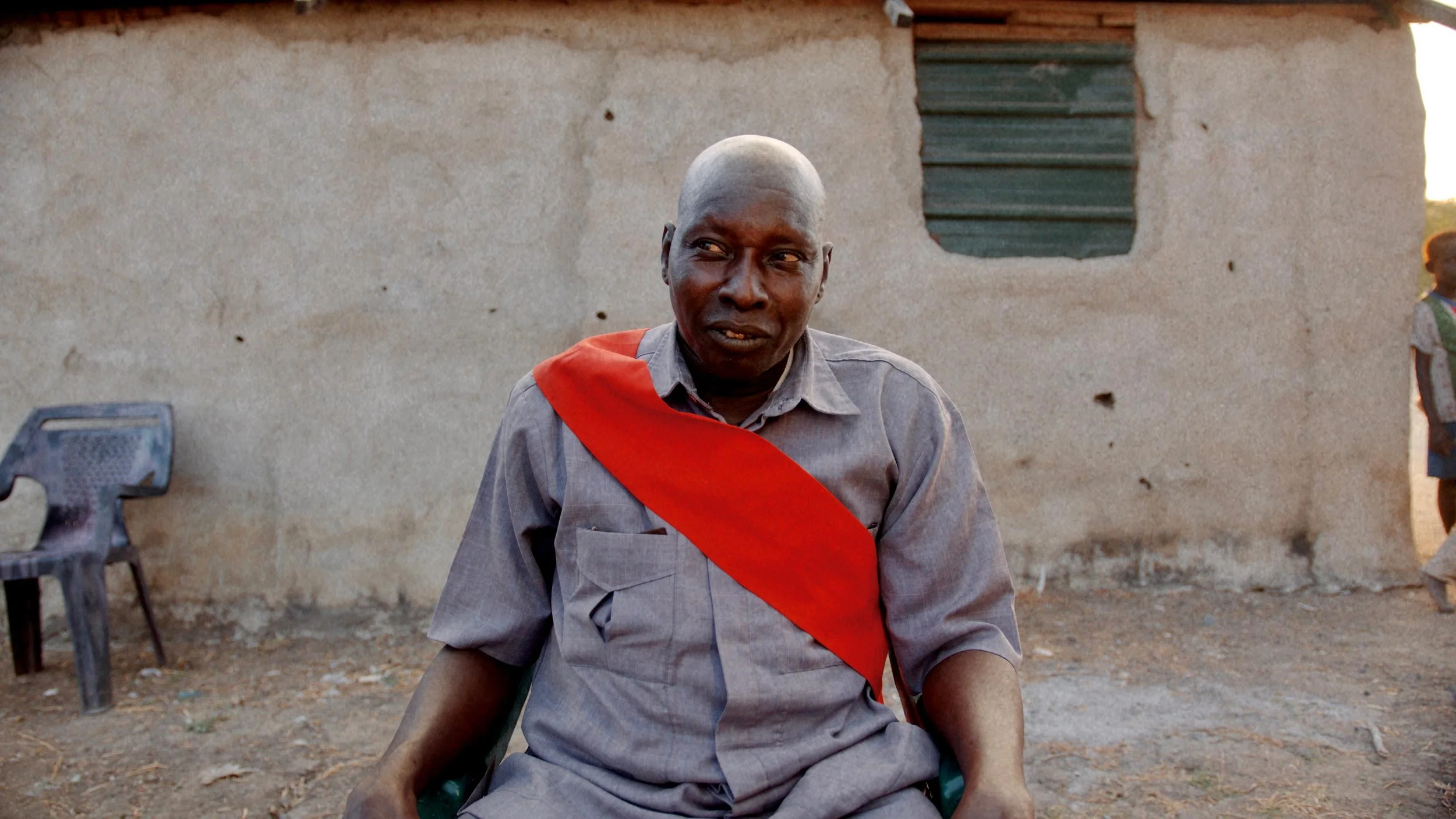
Gulech Wau, Paramount Chief of Gumuruk (GPAA)
Chief Gulech is the Paramount Chief of Gumuruk County in the Greater Pibor Administrative Area (GPAA). In the Murle traditional governance system, he is a Red Chief; a spiritual authority believed to possess the power to invoke curses and to make binding community decisions.
Chief Gulech was among the first chiefs to participate in the Pieri peace process and has remained an active member of the inter-communal governance structures (ICGS) engagements. He has played a significant role in strengthening relations between the Murle and the Bor South County communities.
Barely a week before the planned roads opening, Chief Gulech’s family suffered a tragic loss that many feared would derail the initiative. Armed Murle criminals attacked Baidit Payam in Bor South County and raided cattle. The paramount chiefs of Bor South, Chief Malaak Ayuen immediately contacted Chief Gulech to inform him of the incident.
Upon receiving the news, Chief Gulech took swift action. He travelled to Manyabol Payam in Gumuruk to begin recovering the stolen cattle and identifying those responsible. He successfully recovered several cattle and oversaw the arrest of two suspects.
Tragically, events escalated. Some Dinka youth launched a retaliatory attack into the GPAA, targeting innocent civilians and villages. In the violence that followed, Chief Guleng lost five members of his immediate family, and twelve of his children were abducted by Bor youth.
Prior to these events, Chief Gulech had asked some of his relatives to settle along the main road for security reasons and as a gesture of openness. As he worked toward peace with the Dinka, he wanted his family positioned by the roadside to welcome visitors and travellers, a symbolic act of reconciliation and trust.
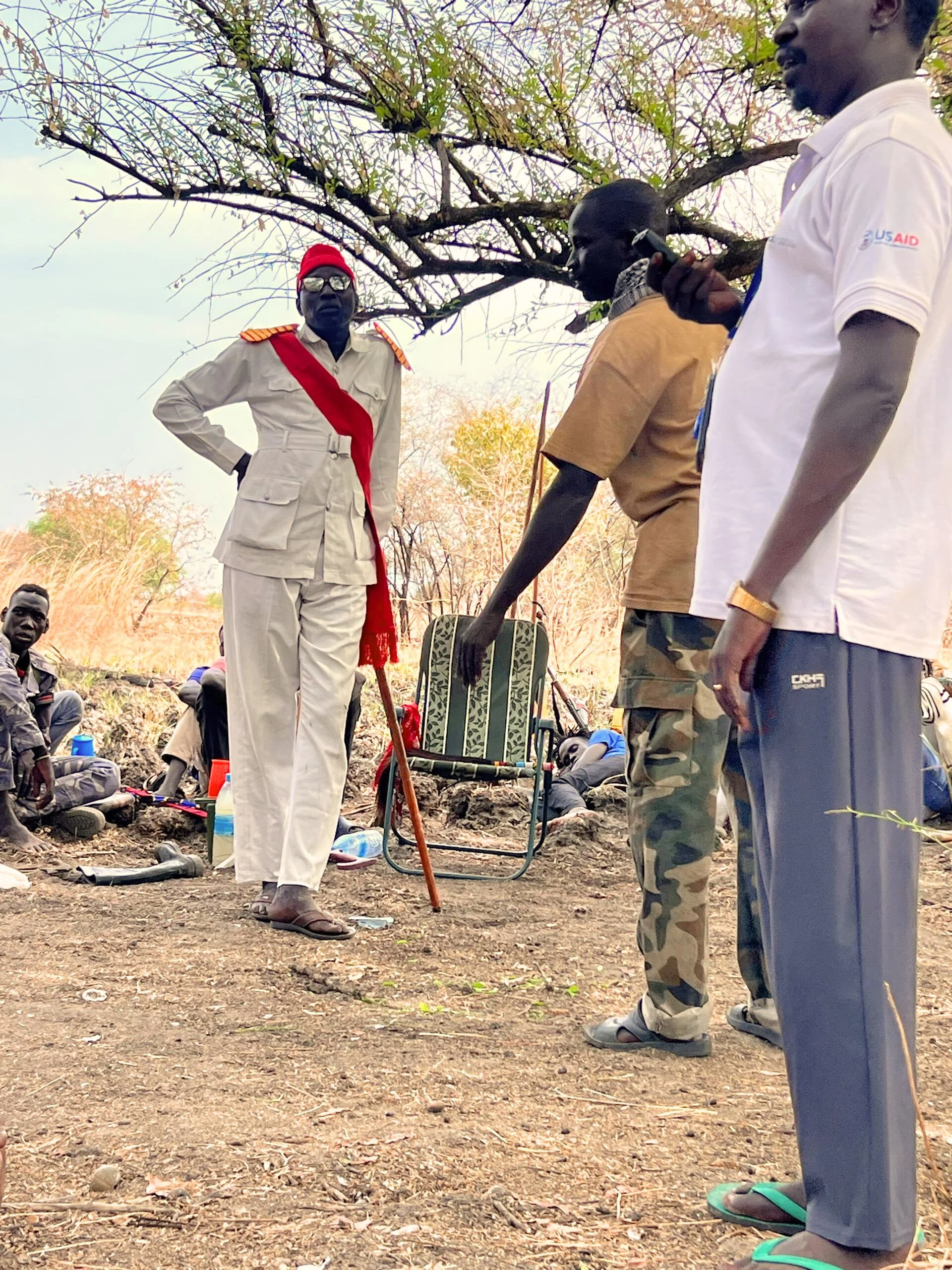
Chief Gulech speaks to the combined group at Zero Zero during the road openings
About a week before the roads opening, serious doubts emerged. Would the Murle communities in Gumuruk still support the initiative after what had happened to Chief Gulech? Would the Dinka community proceed, given the raids in Baidit and other areas?
When teams from Peace Canal and POF travelled to Gumuruk to consult him, Chief Gulech’s response was unequivocal: the roads’ opening must continue.
Despite his profound personal loss, which he noted was not the first time his family had suffered in the Dinka–Murle conflict, he reaffirmed his commitment to the roads opening agreed upon with Murle youth during the November ICGS meeting.
Carrying the heavy burden of grief, facing blame from relatives who felt he had exposed the family to danger, and mourning abducted children and lost loved ones, Chief Gulech nonetheless walked for days to meet his Bor counterparts, changing for the main meeting into his traditional chiefly regalia.
He refused to allow personal pain to overshadow the greater goal of peace for his people. His message was firm, and his question clear:
“If my brothers in Bor informed me about the attack in Baidit, and I reassured them that I would recover their cattle which I have begun to do, why was I not informed that their youth were coming to attack my people?”
He continued:
“We will continue searching for the raided cattle, and I ask for your help in searching for the abducted children and bringing them home. But as Murle, whether the children are returned or not, I remain committed to recovering your cattle and handing them back to you.”
Years of engagement with these communities have shown that relationships built among youth, chiefs, and women become most visible during moments of crisis. In Chief Gulech case, we witness the courage, sacrifice, resilience and moral clarity required to choose peace when revenge seems easier.
His message of leadership was equally beyond ethnic lines, speaking to his Bor South counterpart:
“I cannot say Murle are good and Bor they are bad, no. Murle have done a lot of things which are not good and I cannot deny that. Not actually the whole community, but some of the elements from Murle are not good. I cannot say my people are ok and Bor are bad.”
“We are not leaders of our own communities. We are not from our own communities; we are for everyone. We are leaders of the people – you are not only for Dinka or for Murle.”
For more on the road openings initiative:
